

If your plant isn't running an effective manufacturing standard operating procedures program, you're missing out on serious performance gains. Smart standard operating procedures (SOPs) strengthen equipment maintenance, quality assurance, waste management, and supply-chain stability. SOPs make repeatable processes more efficient.
In this article, we'll discuss the applications, benefits, and importance of manufacturing SOPs .
Key takeaways for manufacturing standard operating procedures
- Standardize your manufacturing tasks with clear, step-by-step SOPs to ensure consistent quality, improve safety, and reduce training time for new technicians.
- Involve your frontline operators and technicians when writing SOPs. Their hands-on experience is critical for creating practical, effective procedures that people will actually use.
- Digitize your SOPs using a computerized maintenance management system (CMMS) like MaintainX to make them accessible on mobile devices, easy to update across all sites, and simple to attach directly to work orders.
- Treat your SOPs as living documents. Schedule regular reviews and updates to reflect changes in processes, equipment, or compliance regulations to maintain their relevance and effectiveness.
What are manufacturing standard operating procedures?
A manufacturing SOP is a detailed, step-by-step document that guides workers through specific manufacturing tasks. Manufacturing SOPs maintain consistency, quality, and safety across all production processes by providing clear instructions that every team member can follow.
They typically include a list of sequential tasks to complete and links to relevant documents, forms, or tools. Visual aids like diagrams, flowcharts, or photos often accompany SOPs to clarify each step.
Manufacturing SOPs work alongside preventive maintenance (PM) work orders, quality control checklists, and inspection audits to keep production processes efficient and reliable.

Seven benefits of manufacturing standard operating procedures
SOPs are crucial for manufacturing facilities to achieve uniform performance, production-line efficiency, enhance quality control in production, and regulatory compliance. Here's a rundown of the benefits you'll experience from launching a solid SOP program.
1. Standardized production
Manufacturing standard operating procedures ensure all employees complete tasks in precisely the same manner across production lines and facility locations. General managers receive fewer questions about how to follow verbalized work instructions.
Standardized production methods not only eliminate confusion but also save management time. Instead of repeatedly explaining how to do something, plant managers can refer employees to SOP documentation.
2. Streamlined communication
Manufacturing SOPs improve communication between team members and across facilities. When you digitize SOPs, employees and managers can access real-time updates of ongoing and performed tasks with minimal chances of miscommunication.
Modern CMMS apps, like MaintainX, enhance communication with digital work order commenting, team messaging, and photo uploading. Better communication flows improve project management and speed up problem response times.
Manufacturing standard operating procedures also help managers interpret key performance indicators (KPIs) more effectively. You can't improve what you don't measure.
Standard operating procedures provide this measurement capability by:
- Tracking specific steps: Link performance metrics to actual process steps
- Identifying bottlenecks: Pinpoint exactly where delays or quality issues occur
- Enabling data-driven decisions: Share meaningful metrics with team members to explain corrective actions
3. Improved quality assurance
Producing dependable final products is crucial to maintaining long-term customer relationships. For this reason, managers must build plant systems with acceptable quality standards.
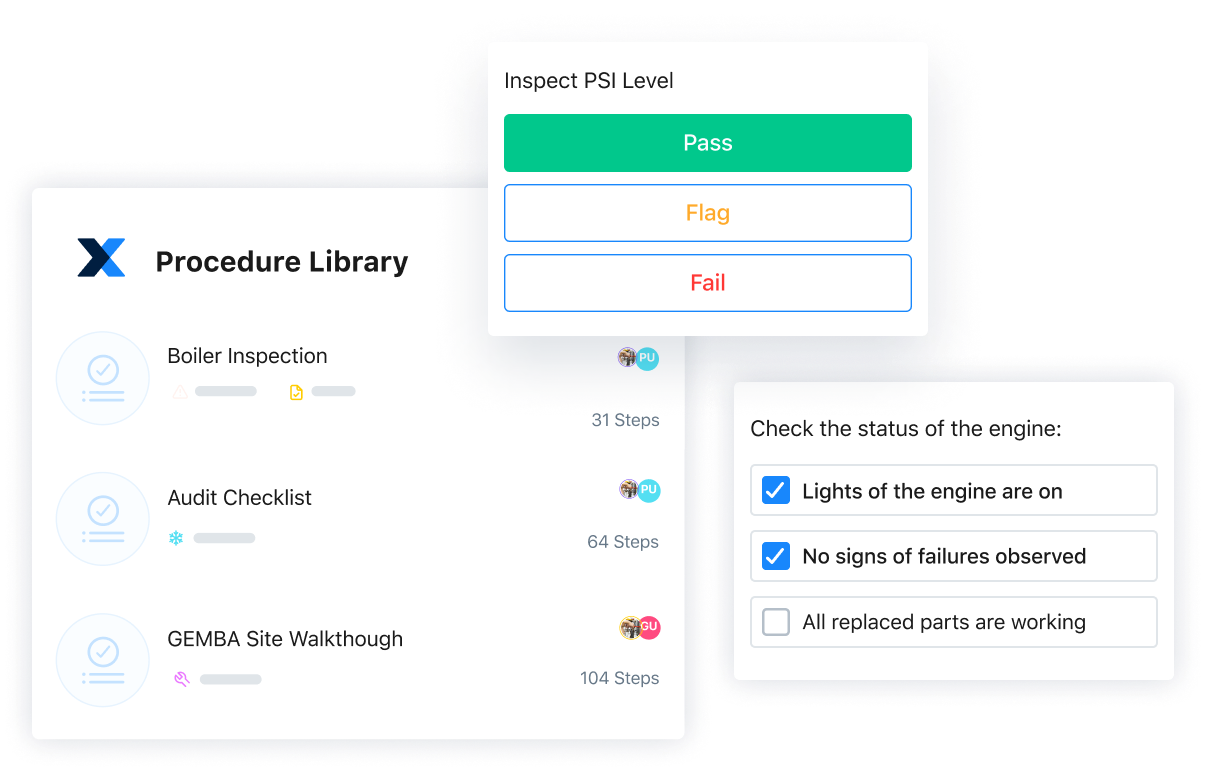
Documenting and measuring SOPs effectiveness helps ensure that manufacturing teams meet the International Organization for Standardization (ISO)'s seven ISO 9000 quality management principles for product quality requirements. A solid quality management system prevents teams from cutting corners during production.


4. Improved regulatory compliance
SOPs also help manufacturing facilities follow best practices for record-keeping to ensure they prepare for regulatory audits appropriately. Thorough SOPs support the implementation of safety and compliance standards, which is necessary to pass Occupational Safety and Health Administration (OSHA) safety inspections.
While paper SOP records are better than none at all, SOP software simplifies the process with digital audit trails. Manufacturing facilities can protect themselves from legal issues with digitized reports that automatically track compliance with time and date stamps.
5. Enhanced accountability
Beyond standardizing tasks, SOPs clearly define who's responsible for what. Such accountability measures make it easier for plant managers to track performance, improve compliance, and provide direction across the manufacturing floor.
This helps managers identify gaps in tribal knowledge or skill that require new training programs. Alternatively, management can provide workers with validation that they are doing a good job. Regardless, greater accountability opens the door to providing guidance for continuous improvement.
6. Improved plant efficiency
Consistently improving production efficiency is crucial to plant growth. Exemplary managers continuously evaluate equipment performance patterns, organizational bottlenecks and opportunities for cutting total manufacturing costs.
Established SOPs provide a baseline for measuring progress and making informed decisions. Once managers identify frequent mistakes or extra steps that don't add value to operational goals, they're in a powerful position to course correct.
7. Minimized manufacturing waste
Manufacturing facilities should adopt lean manufacturing principles to improve efficiency and eliminate or minimize waste. There are eight different types of manufacturing waste that effective SOPs help to eliminate or reduce. They include:
- Defects
- Overproduction
- Waiting times
- Under-utilization of talent
- Transportation waste
- Inventory waste
- Overprocessing
- Motion waste
Solid SOPs help management better monitor the effectiveness of production lines, pieces of equipment, and employees.
This best practice helps plant leaders confidently tweak business processes based on actual data points rather than hunches. Interested in learning more? Click here to learn why writing standard operating procedures with waste reduction in mind is conducive to success.
How to write manufacturing standard operating procedures
Here are the key steps for writing effective manufacturing SOPs:
1. Establish objectives
Start by determining the specific process or complex task you want to standardize with your SOP. Clear objectives ensure your manufacturing task checklists are focused and effective.
Common SOP objectives include:
- Production standardization: Document consistent manufacturing processes
- Quality assurance: Outline steps for quality control checkpoints
- Safety protocols: Create guidelines to prevent accidents and injuries
- Regulatory compliance: Meet industry or government regulatory requirements
2. Gather necessary data
Gather all necessary information before writing your SOP. This includes both technical documentation and frontline worker expertise.
Essential data sources for manufacturing SOPs include:
- Technical documentation: Equipment manuals, specifications, regulatory guidelines
- Safety requirements: OSHA standards, facility-specific protocols
- Frontline expertise: Input from operators, technicians, and supervisors
- Historical data: Past incident reports, maintenance logs, quality metrics
Maintenance managers should prioritize frontline worker input—their hands-on experience makes SOPs practical and effective.
3. Define process steps
Break the process into a clear, step-by-step outline using the relevant data you have. Imagine you are explaining it to someone new to the process. The goal is to create a logical flow of tasks that's simple and easy to follow from start to finish.
Each step of the manufacturing procedure should include clear details, but avoid unnecessary complexity. To streamline this process, consider using tools like an AI-powered procedure generator. It helps you quickly create well structured manufacturing SOPs by inputting a few key details.
4. Prioritize compliance standards
Ensure you include any relevant safety and compliance requirements, considering industry regulations like OSHA standards and any information specific to your facility.
5. Test and review
Put your SOPs to the test. Have your frontline workers—operators, technicians, and anyone involved in the process—try them out in real-world scenarios. Pay close attention to how they adapt to the instructions and gather their feedback.
This hands-on approach will help you uncover potential issues and improvement areas so your final SOPs work for your team.
6. Digitize standard operating procedures with a CMMS
A CMMS streamlines digital SOP creation, storage, access, and updates. Cloud-based storage ensures that your team members can access SOPs from anywhere, anytime, while managers can easily update and share new procedures as needed.
To make things even easier, choose CMMS platforms with built-in procedure libraries that give you access to a wealth of industry-standard SOP templates to use and adapt to your specific needs.
7. Monitor and update
Monitor the effectiveness of each SOPover time and update as needed. Processes, equipment, and applicable regulation changes, so keeping SOPs current and up-to-date is essential.
Regularly ask your team for feedback to identify issues or improvement opportunities. An outdated SOP leads to confusion, errors, and compliance risks, so maintaining its relevance is crucial for ongoing success.
Manufacturing standard operating procedure templates
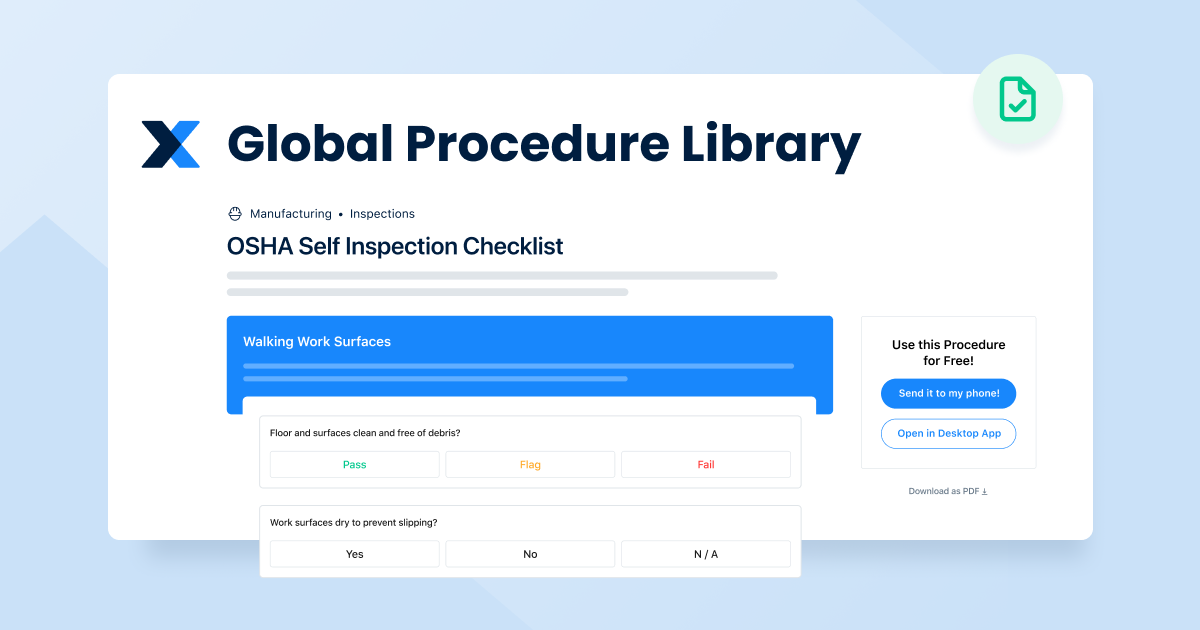
Instead of building SOPs from scratch, you can use existing documented procedures as a baseline and modify them to suit your needs. MaintainX's Global Procedure Library houses applicable procedures, like safety procedures and maintenance procedures, from various industries and companies, covering different functions. Here are a few:
Procedure for equipment check-in
This SOP outlines the procedures for checking equipment in and out of a lot.
Hazard assessment checklist
Use this to assess your facility for safety hazards
Climate control system preventive maintenance
This procedure inspects all locations and units of the climate control system. This is important to ensure your system is working effectively.
OSHA self-inspection checklist
The OSHA self inspection checklist focuses on providing all necessary practices and responses for safety and health measures. Remove risks and provide a safe working environment for your workers.
Safe Quality Food fundamentals checklist: basic level for primary production
The Safe Quality Food (SQF) Fundamentals Code checklist helps suppliers perform internal audits and gap assessments to the SQF Fundamentals for Manufacturing.
Streamline manufacturing operations with MaintainX
MaintainX empowers busy manufacturing teams to streamline their processes, transforming paper-based SOPs into interactive, digitized procedure checklists accessible right from their smartphones. With real-time updates and monitoring, the platform ensures everyone is on the same page, fostering efficiency and accuracy.
Key features that enhance your workflow
AI-enabled procedure generator
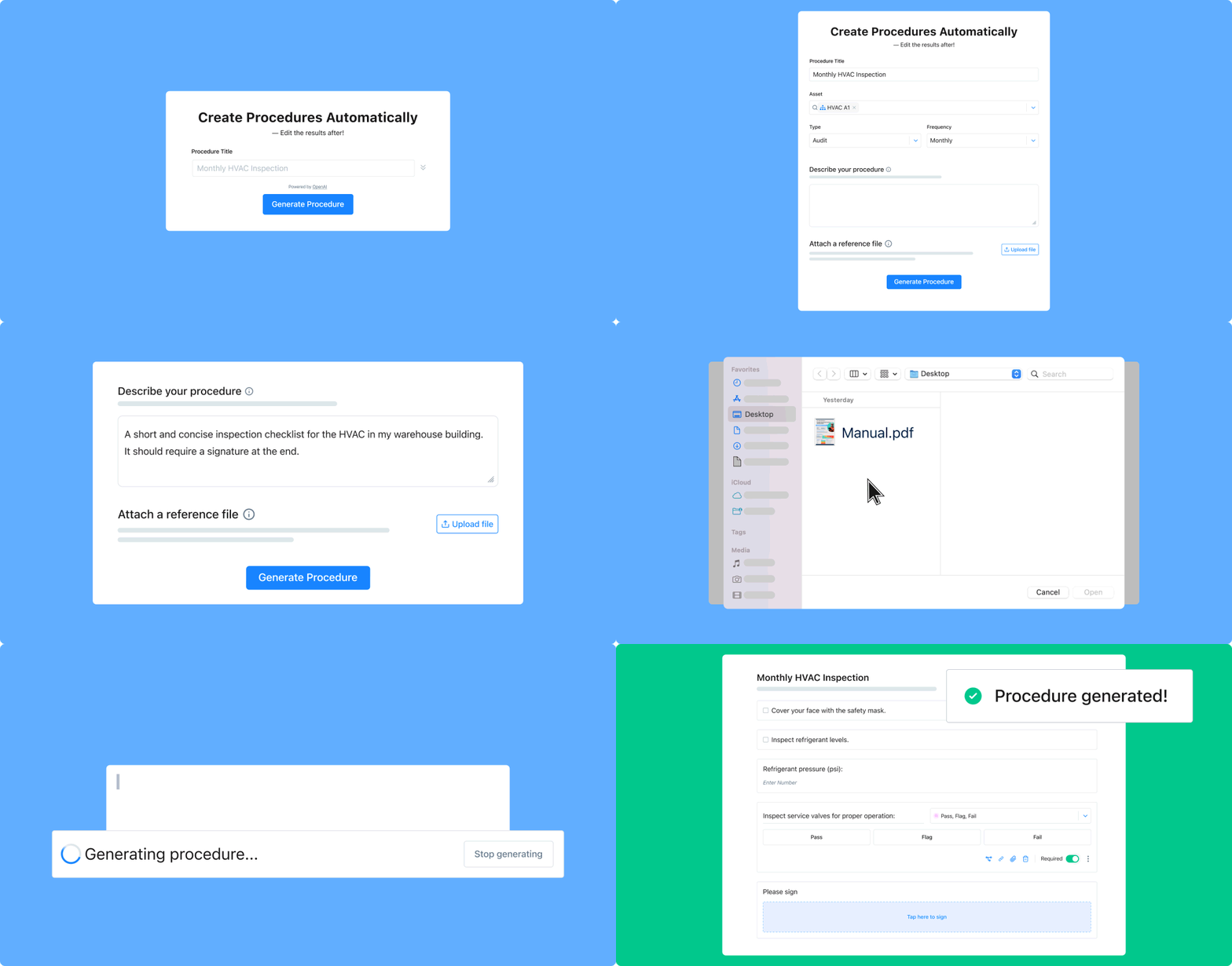
Save valuable time by uploading existing files or typing out instructions in MaintainX's AI-powered procedure generator. The system will do the heavy lifting and generate a structured procedure you can review and customize. Think of it like a virtual assistant for creating SOPs.
A robust procedure library
Tap into a vast collection of pre-built SOP templates from various industries and customize them to your needs. Instantly enhance your workflow, safety practices, and overall operational efficiency.
In-depth reporting capabilities
Unlock critical insight into your operations with MaintainX's robust reporting capabilities. Track critical metrics, pinpoint areas for improvement, and drive operational excellence through data-driven decisions. You can also create custom dashboards to monitor and report on the metrics that matter most to your business.

Digital audit trails
Establish a single source of truth for your operations with digital audit trails. Ensure regulatory compliance, identify bottlenecks or errors, and maintain complete transparency and accountability throughout your operations.

The final word on manufacturing SOPs
Manufacturing facilities can no longer rely on outdated paper-based systems and inflexible legacy software that limit frontline worker engagement and operational capacity.
MaintainX bridges this gap with a mobile-first platform that is specifically designed for the industrial workforce. Our mission is simple: one platform for maintenance, repair, and operations to keep the physical world running.
Transform your manufacturing SOPs from cumbersome paperwork into streamlined digital procedures that your technicians will actually use. Sign Up for Free and discover how the platform reduces your unplanned downtime, cuts maintenance costs, and empowers your frontline teams with the tools they deserve.
Manufacturing SOPs FAQs
What are the most effective standard operating procedure formats for manufacturing facilities?
Common formats for manufacturing SOPs include narrative-based instructions, checklists, flowcharts, and step-by-step guides. Some procedures use a combination of these formats to ensure clarity and accessibility for users.
Can you customize MaintainX standard operating procedure templates for different manufacturing processes?
You can easily customize MaintainX SOP templates. MaintainX designs them to be flexible, allowing you to adjust them to fit your specific processes and organizational needs.
Who should write manufacturing standard operating procedures in asset-intensive facilities?
Typically, subject matter experts write manufacturing SOPs such as experienced managers, supervisors, operators, quality control specialists, or safety officers. They collaborate with other frontline workers to ensure accuracy and completeness.
How often should manufacturing facilities review and update their standard operating procedures?
You should review and update manufacturing SOPs at least annually or whenever there's a significant change in processes, equipment, regulations, or safety requirements. Regular reviews help ensure that the procedures remain accurate, effective, and compliant.

Caroline Eisner is a writer and editor with experience across the profit and nonprofit sectors, government, education, and financial organizations. She has held leadership positions in K16 institutions and has led large-scale digital projects, interactive websites, and a business writing consultancy.

.png)


.webp)